
In the chat, she typed the words: Chronic Bell’s Palsy. Despite that, she was there—listening, engaging, and eventually joining the community.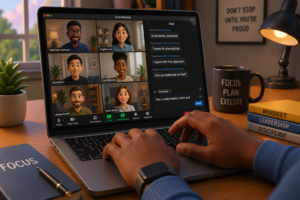
That was a powerful realization for me.
Witnessing Jacqui show up and commit to trying, despite everything, makes it clear: the camera isn’t the real obstacle for most of us.
The Real Problem Is Not the Camera
It’s the loop.
You know the one. You open the recording app, you see yourself on screen, and then the whole conversation starts. Your voice sounds wrong. Your face looks wrong. What if nobody watches? What if everyone watches? What if you forget what you’re saying? What if you say it wrong and it lives on the internet forever?
I heard versions of that loop from almost everyone in that webinar. Freeze up. Go blank. Sound deep. Look foolish. Accent. Imposter syndrome. Perfectionism. The fear that people will finally see who you really are and decide they were right not to trust you.
That is the loop. And here is the honest truth about it: it does not go away. You just get better at not letting it be in charge.
What I Saw in That Room
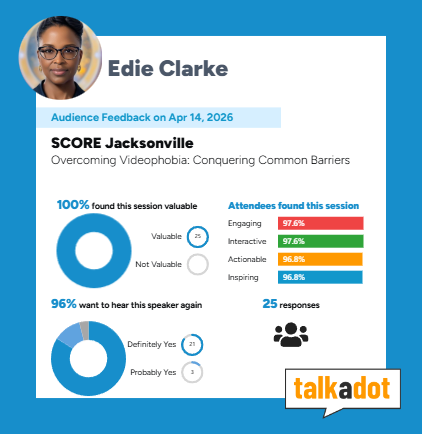
One hundred percent of attendees said the session was valuable. Ninety-seven percent said they would hear from me again. That is not me bragging. That is me telling you something real happened in that room.
Piret did not even make it to the live session. She watched the replay, went and found my YouTube channel, and subscribed. From a replay. Because something landed.
Robin said she is still scared and will get something into the support group anyway.
And Jacqui, who has chronic Bell’s palsy and every reason to stay off camera, signed up for the group and sent a note that simply said: “I signed up for your group.”
These are not people who suddenly got brave. They are people who found a small enough first move that they could actually take it.
The One Thing That Actually Works
Here is what I asked everyone in that webinar to do.
Record one faceless video within 24 hours.
Thirty seconds. Maybe a little longer if the question needs it. Answer one question that someone in your industry actually asks you. Screen share. Slides. Your hands on a keyboard. A whiteboard. Whatever works. Just no face required.
I started this way myself. I was too afraid to be seen, so I did tutorial videos where you could hear my voice but not see me. That was enough to start. It got me moving. Eventually I worked up to showing up in the lower third of the frame. Then opening and closing videos. Then finally just being there.
The faceless video is not a workaround. It is a legitimate first move. And I want you to post it inside the Embrace Video Action Lab so you get into the actual habit of posting, even if it is just in a private space with people who are doing the same thing you are.
What the Community Is Actually For

I hid for four or five years because I did not have anyone to help me through it or a safe space to practice in. The Embrace Video Action Lab exists because I did not want that for anyone else. It is a place to post your videos, get real feedback, and build the kind of confidence that only comes from doing the thing, not just thinking about doing it. People in there are not polished. They are practicing. That is the whole point.
Your Next Move
If anything in this post sounded like your own head talking back to you, come join us. It is free.
Join for Free Today!